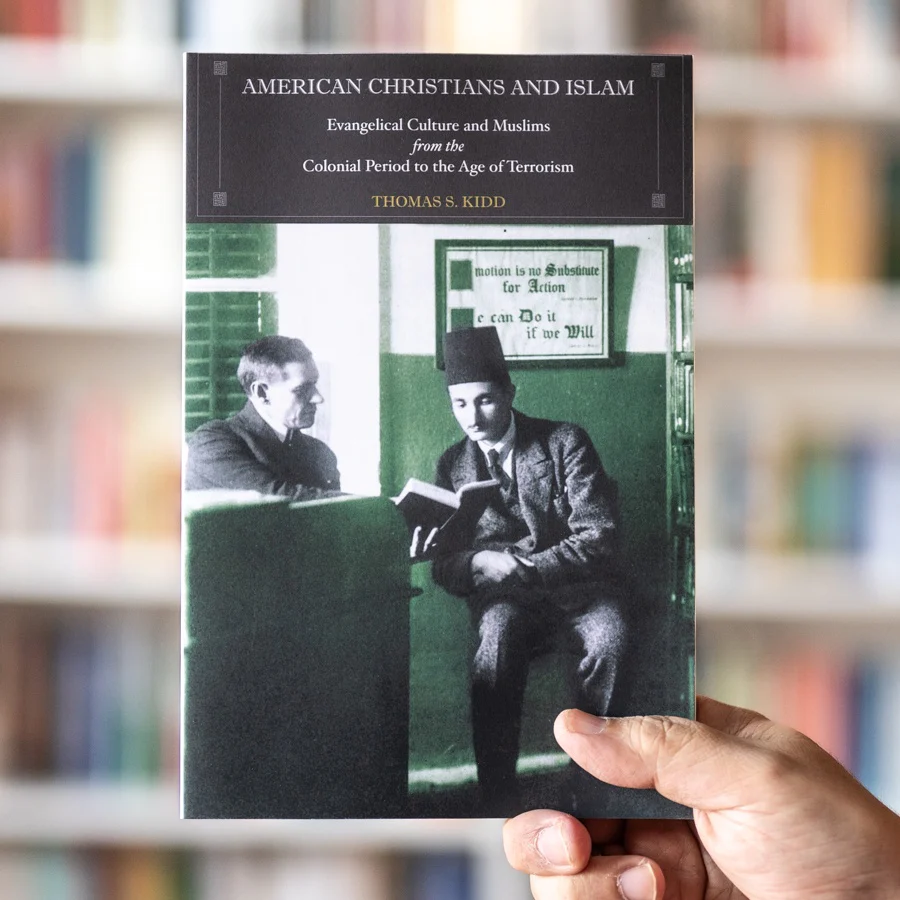
American Christians and Islam
Thomas S. Kidd
Paperback, 224 pages
9780691162300
Evangelical Culture and Muslims from the Colonial Period to the Age of Terrorism
In the wake of the September 11 terrorist attacks, many of America’s Christian evangelicals have denounced Islam as a “demonic” and inherently violent religion, provoking frustration among other Christian conservatives who wish to present a more appealing message to the world’s Muslims. Yet as Thomas Kidd reveals in this sobering book, the conflicted views expressed by today’s evangelicals have deep roots in American history.
Tracing Islam’s role in the popular imagination of American Christians from the colonial period to today, Kidd demonstrates that Protestant evangelicals have viewed Islam as a global threat — while also actively seeking to convert Muslims to the Christian faith — since the nation’s founding. He shows how accounts of “Mahometan” despotism and lurid stories of European enslavement by Barbary pirates fuelled early evangelicals’ fears concerning Islam, and describes the growing conservatism of American missions to Muslim lands up through the post-World War II era. Kidd exposes American Christians’ anxieties about an internal Islamic threat from groups like the Nation of Islam in the 1960s and America’s immigrant Muslim population today, and he demonstrates why Islam has become central to evangelical “end-times” narratives.
Product Information
Product Information
Shipping & Returns
Shipping & Returns



American Christians and Islam
American Christians and Islam
Thomas S. Kidd
Paperback, 224 pages
9780691162300
Evangelical Culture and Muslims from the Colonial Period to the Age of Terrorism
In the wake of the September 11 terrorist attacks, many of America’s Christian evangelicals have denounced Islam as a “demonic” and inherently violent religion, provoking frustration among other Christian conservatives who wish to present a more appealing message to the world’s Muslims. Yet as Thomas Kidd reveals in this sobering book, the conflicted views expressed by today’s evangelicals have deep roots in American history.
Tracing Islam’s role in the popular imagination of American Christians from the colonial period to today, Kidd demonstrates that Protestant evangelicals have viewed Islam as a global threat — while also actively seeking to convert Muslims to the Christian faith — since the nation’s founding. He shows how accounts of “Mahometan” despotism and lurid stories of European enslavement by Barbary pirates fuelled early evangelicals’ fears concerning Islam, and describes the growing conservatism of American missions to Muslim lands up through the post-World War II era. Kidd exposes American Christians’ anxieties about an internal Islamic threat from groups like the Nation of Islam in the 1960s and America’s immigrant Muslim population today, and he demonstrates why Islam has become central to evangelical “end-times” narratives.
Original: $30.44
-70%$30.44
$9.13Product Information
Product Information
Shipping & Returns
Shipping & Returns
Description
Thomas S. Kidd
Paperback, 224 pages
9780691162300
Evangelical Culture and Muslims from the Colonial Period to the Age of Terrorism
In the wake of the September 11 terrorist attacks, many of America’s Christian evangelicals have denounced Islam as a “demonic” and inherently violent religion, provoking frustration among other Christian conservatives who wish to present a more appealing message to the world’s Muslims. Yet as Thomas Kidd reveals in this sobering book, the conflicted views expressed by today’s evangelicals have deep roots in American history.
Tracing Islam’s role in the popular imagination of American Christians from the colonial period to today, Kidd demonstrates that Protestant evangelicals have viewed Islam as a global threat — while also actively seeking to convert Muslims to the Christian faith — since the nation’s founding. He shows how accounts of “Mahometan” despotism and lurid stories of European enslavement by Barbary pirates fuelled early evangelicals’ fears concerning Islam, and describes the growing conservatism of American missions to Muslim lands up through the post-World War II era. Kidd exposes American Christians’ anxieties about an internal Islamic threat from groups like the Nation of Islam in the 1960s and America’s immigrant Muslim population today, and he demonstrates why Islam has become central to evangelical “end-times” narratives.