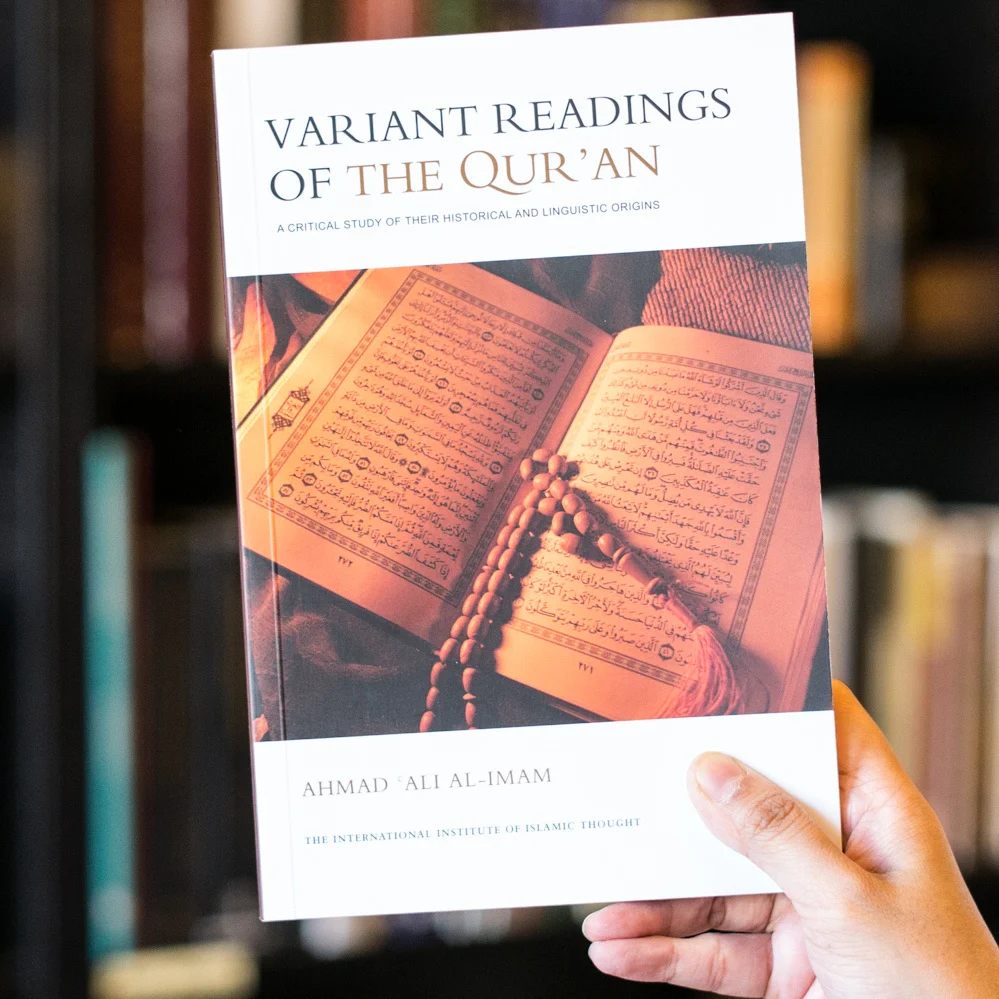
Contemporary Perspectives on Revelation and Quranic Hermeneutics: An Analysis of Four Discourses
Ali Akbar
Paperback, 200 pages
9781474456173
Expounds the ideas of four modern Islamic scholars who challenge the traditional theory of revelation
A number of innovative hermeneutical approaches emerged in Muslim exegetical discourse in the second half of the 20th century. Among these developments is a trend of systematic reform theology that emphasises a humanistic approach, whereby revelation is understood to be dependent not only upon its initiator, God, but also upon its recipient, Prophet Muhammad, who takes an active role in the process.
Ali Akbar examines the works of four noted scholars of Islam: Fazlur Rahman (Pakistan), Abdolkarim Soroush (Iran), Muhammad Mujtahed Shabestari (Iran) and Nasr Hamid Abu Zayd (Egypt). His study shows that the consequences of taking a humanistic approach to understanding revelation are not confined to the realm of speculation about God–human relations, but also to interpreting Qur’anic socio-political precepts. And the four scholars emerge as a distinctive group of Muslim thinkers who open up a new horizon in contemporary Islamic discourse.
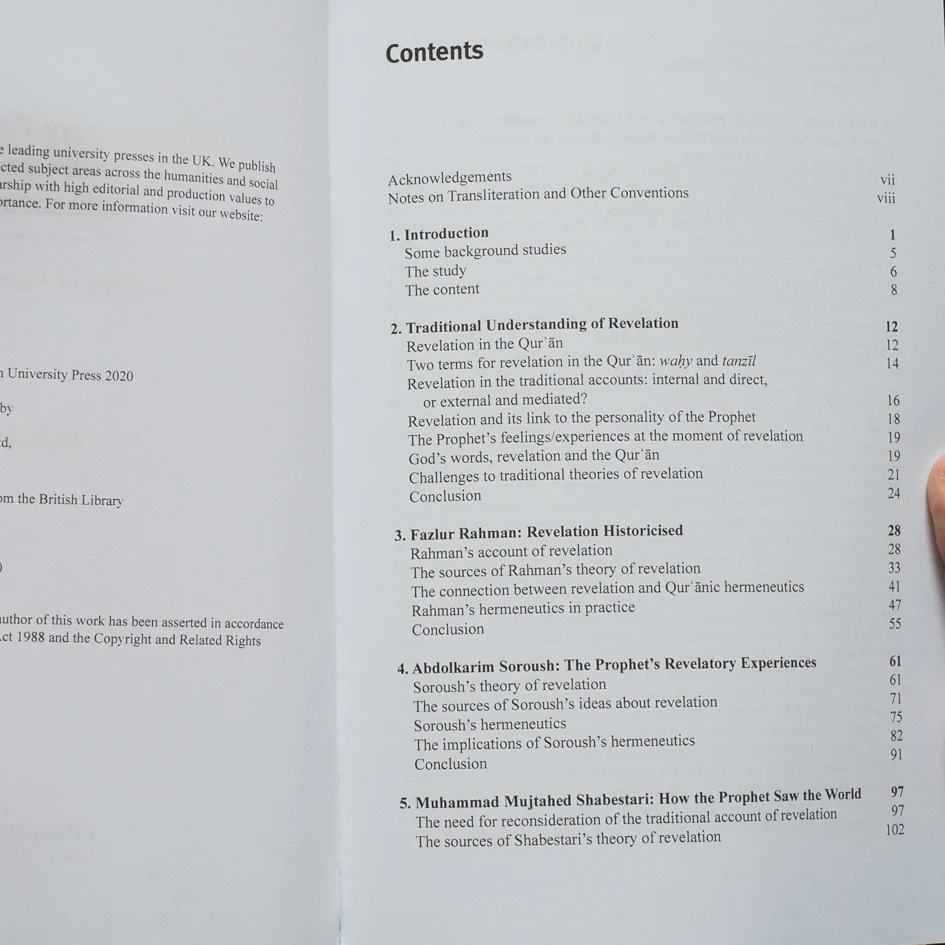
Contents
1. Introduction
2. Traditional Understanding of Revelation
3. Fazlur Rahman: Revelation Historicized
4. Abdolkarim Soroush: the Prophet’s Revelatory Experiences
5. Muhammad Mujtahed Shabestari: How the Prophet saw the world
6. Nasr Hamid Abu Zayd: Revelation as a Linguistic Manifestation of the Communicative Interaction between God and the Prophet
7. Conclusion
Product Information
Product Information
Shipping & Returns
Shipping & Returns




Contemporary Perspectives on Revelation and Quranic Hermeneutics: An Analysis of Four Discourses
Contemporary Perspectives on Revelation and Quranic Hermeneutics: An Analysis of Four Discourses
Ali Akbar
Paperback, 200 pages
9781474456173
Expounds the ideas of four modern Islamic scholars who challenge the traditional theory of revelation
A number of innovative hermeneutical approaches emerged in Muslim exegetical discourse in the second half of the 20th century. Among these developments is a trend of systematic reform theology that emphasises a humanistic approach, whereby revelation is understood to be dependent not only upon its initiator, God, but also upon its recipient, Prophet Muhammad, who takes an active role in the process.
Ali Akbar examines the works of four noted scholars of Islam: Fazlur Rahman (Pakistan), Abdolkarim Soroush (Iran), Muhammad Mujtahed Shabestari (Iran) and Nasr Hamid Abu Zayd (Egypt). His study shows that the consequences of taking a humanistic approach to understanding revelation are not confined to the realm of speculation about God–human relations, but also to interpreting Qur’anic socio-political precepts. And the four scholars emerge as a distinctive group of Muslim thinkers who open up a new horizon in contemporary Islamic discourse.
Contents
1. Introduction
2. Traditional Understanding of Revelation
3. Fazlur Rahman: Revelation Historicized
4. Abdolkarim Soroush: the Prophet’s Revelatory Experiences
5. Muhammad Mujtahed Shabestari: How the Prophet saw the world
6. Nasr Hamid Abu Zayd: Revelation as a Linguistic Manifestation of the Communicative Interaction between God and the Prophet
7. Conclusion
Original: $35.12
-70%$35.12
$10.54Product Information
Product Information
Shipping & Returns
Shipping & Returns
Description
Ali Akbar
Paperback, 200 pages
9781474456173
Expounds the ideas of four modern Islamic scholars who challenge the traditional theory of revelation
A number of innovative hermeneutical approaches emerged in Muslim exegetical discourse in the second half of the 20th century. Among these developments is a trend of systematic reform theology that emphasises a humanistic approach, whereby revelation is understood to be dependent not only upon its initiator, God, but also upon its recipient, Prophet Muhammad, who takes an active role in the process.
Ali Akbar examines the works of four noted scholars of Islam: Fazlur Rahman (Pakistan), Abdolkarim Soroush (Iran), Muhammad Mujtahed Shabestari (Iran) and Nasr Hamid Abu Zayd (Egypt). His study shows that the consequences of taking a humanistic approach to understanding revelation are not confined to the realm of speculation about God–human relations, but also to interpreting Qur’anic socio-political precepts. And the four scholars emerge as a distinctive group of Muslim thinkers who open up a new horizon in contemporary Islamic discourse.
Contents
1. Introduction
2. Traditional Understanding of Revelation
3. Fazlur Rahman: Revelation Historicized
4. Abdolkarim Soroush: the Prophet’s Revelatory Experiences
5. Muhammad Mujtahed Shabestari: How the Prophet saw the world
6. Nasr Hamid Abu Zayd: Revelation as a Linguistic Manifestation of the Communicative Interaction between God and the Prophet
7. Conclusion