Islam and Modernity: Transformation of an Intellectual Tradition
Fazlur Rahman
Paperback, 182 pages
9780226702841
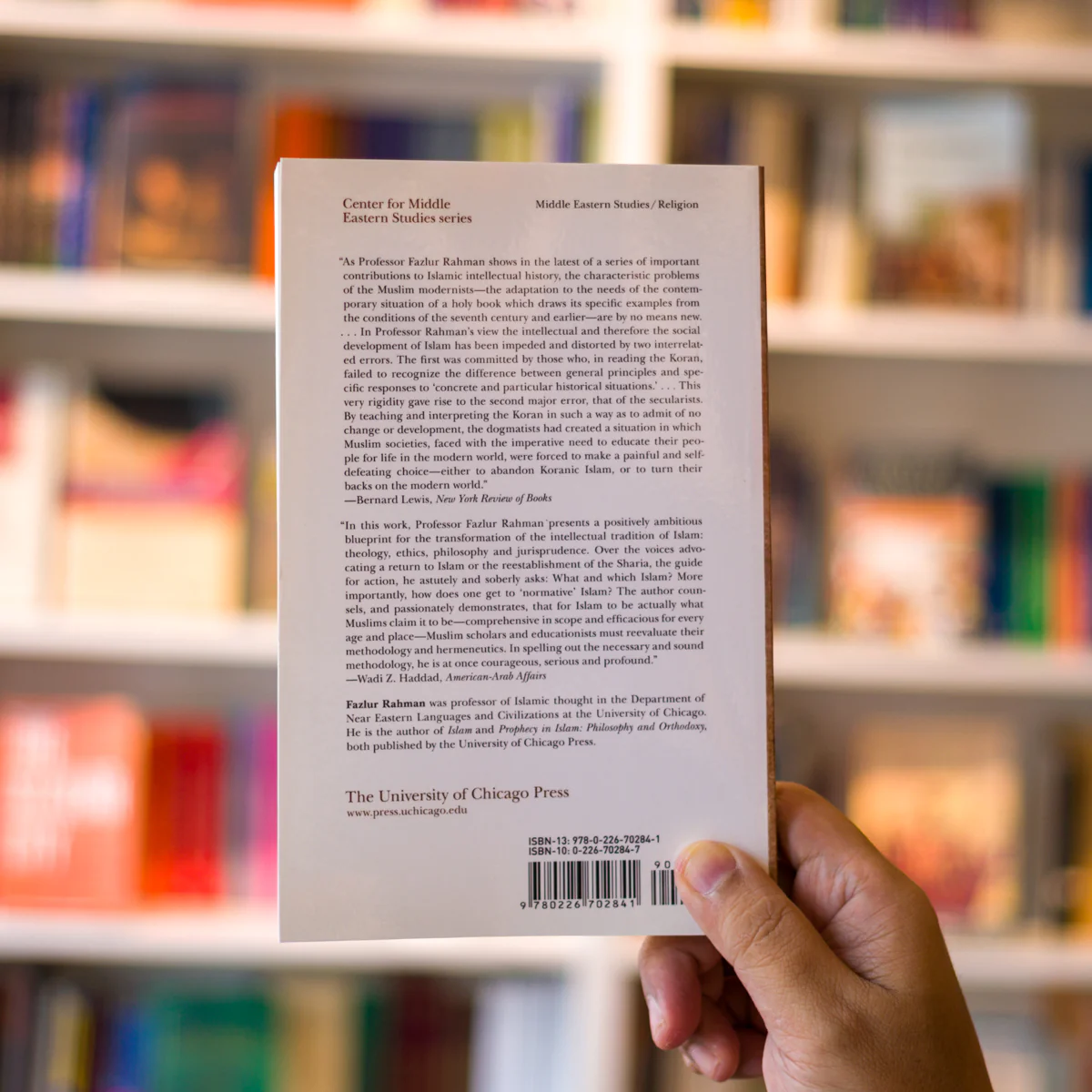
“As Professor Fazlur Rahman shows in the latest of a series of important contributions to Islamic intellectual history, the characteristic problems of the Muslim modernists—the adaptation to the needs of the contemporary situation of a holy book which draws its specific examples from the conditions of the seventh century and earlier—are by no means new. . . . In Professor Rahman’s view the intellectual and therefore the social development of Islam has been impeded and distorted by two interrelated errors. The first was committed by those who, in reading the Koran, failed to recognize the differences between general principles and specific responses to ’concrete and particular historical situations.’ . . . This very rigidity gave rise to the second major error, that of the secularists. By teaching and interpreting the Koran in such a way as to admit of no change or development, the dogmatists had created a situation in which Muslim societies, faced with the imperative need to educate their people for life in the modern world, were forced to make a painful and self-defeating choice—either to abandon Koranic Islam, or to turn their backs on the modern world.”—Bernard Lewis, New York Review of Books
Contents
Introduction
1. The Heritage
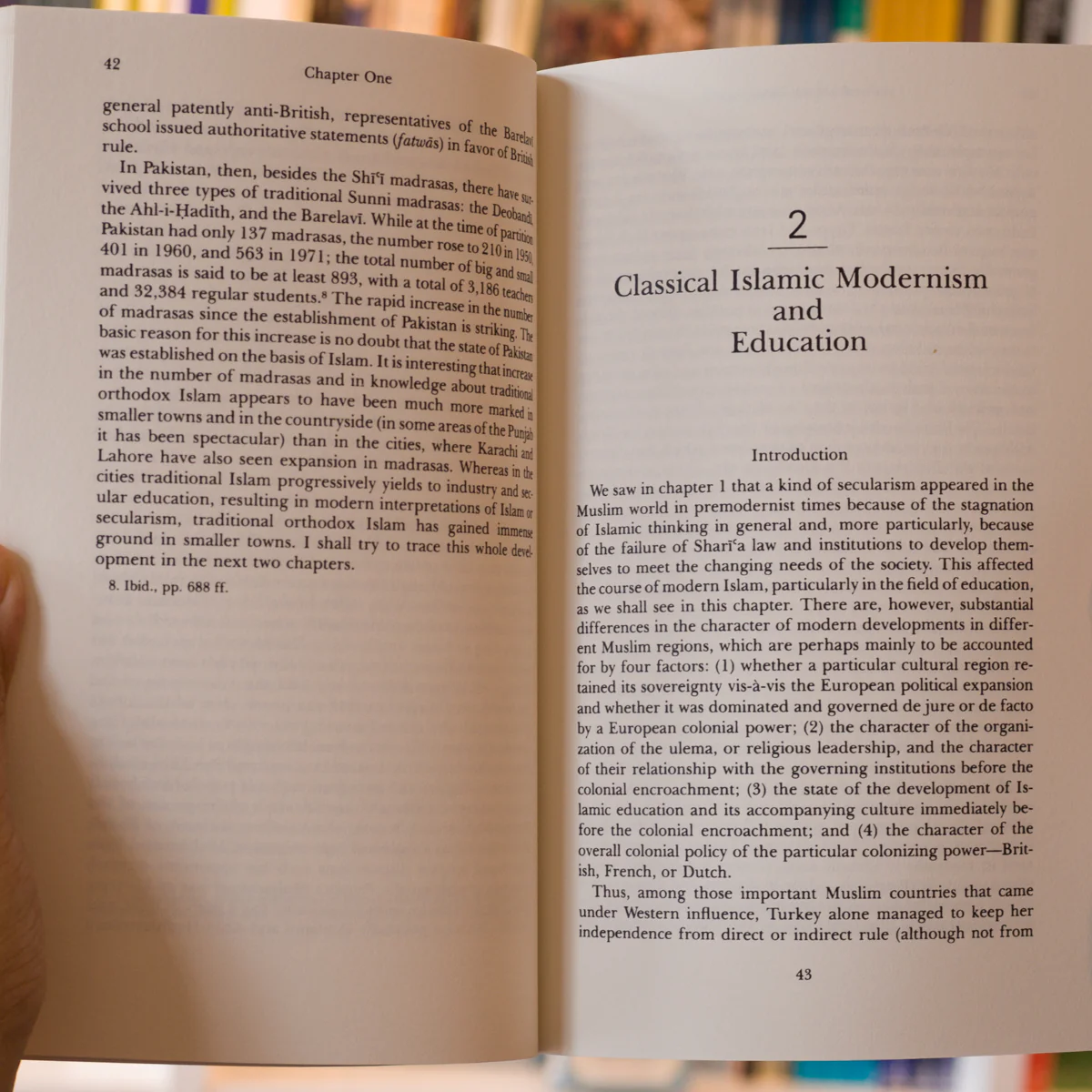
2. Classical Islamic Modernism and Education
3. Contemporary Modernism
4. Prospects and Some Suggestions
Product Information
Product Information
Shipping & Returns
Shipping & Returns


Islam and Modernity: Transformation of an Intellectual Tradition
Islam and Modernity: Transformation of an Intellectual Tradition
Fazlur Rahman
Paperback, 182 pages
9780226702841
“As Professor Fazlur Rahman shows in the latest of a series of important contributions to Islamic intellectual history, the characteristic problems of the Muslim modernists—the adaptation to the needs of the contemporary situation of a holy book which draws its specific examples from the conditions of the seventh century and earlier—are by no means new. . . . In Professor Rahman’s view the intellectual and therefore the social development of Islam has been impeded and distorted by two interrelated errors. The first was committed by those who, in reading the Koran, failed to recognize the differences between general principles and specific responses to ’concrete and particular historical situations.’ . . . This very rigidity gave rise to the second major error, that of the secularists. By teaching and interpreting the Koran in such a way as to admit of no change or development, the dogmatists had created a situation in which Muslim societies, faced with the imperative need to educate their people for life in the modern world, were forced to make a painful and self-defeating choice—either to abandon Koranic Islam, or to turn their backs on the modern world.”—Bernard Lewis, New York Review of Books
Contents
Introduction
1. The Heritage
2. Classical Islamic Modernism and Education
3. Contemporary Modernism
4. Prospects and Some Suggestions
Original: $43.55
-70%$43.55
$13.06Product Information
Product Information
Shipping & Returns
Shipping & Returns
Description
Fazlur Rahman
Paperback, 182 pages
9780226702841
“As Professor Fazlur Rahman shows in the latest of a series of important contributions to Islamic intellectual history, the characteristic problems of the Muslim modernists—the adaptation to the needs of the contemporary situation of a holy book which draws its specific examples from the conditions of the seventh century and earlier—are by no means new. . . . In Professor Rahman’s view the intellectual and therefore the social development of Islam has been impeded and distorted by two interrelated errors. The first was committed by those who, in reading the Koran, failed to recognize the differences between general principles and specific responses to ’concrete and particular historical situations.’ . . . This very rigidity gave rise to the second major error, that of the secularists. By teaching and interpreting the Koran in such a way as to admit of no change or development, the dogmatists had created a situation in which Muslim societies, faced with the imperative need to educate their people for life in the modern world, were forced to make a painful and self-defeating choice—either to abandon Koranic Islam, or to turn their backs on the modern world.”—Bernard Lewis, New York Review of Books
Contents
Introduction
1. The Heritage
2. Classical Islamic Modernism and Education
3. Contemporary Modernism
4. Prospects and Some Suggestions