Islam in World History
Susan L. Douglass, Tom Facchine
Paperback, 214 pages
9781032648149
Islam in World History examines the emergence and development of Islam as a world religion in the Abrahamic tradition and the unfolding of Muslim society and civilization over fourteen centuries.
In contrast to the usual recital of the rise of Islam as a “new” religion, this book looks at the religious, geographic, and civilizational context in which Islam emerged and became a religiously, ethnically, and culturally diverse society deeply connected with hemispheric networks and exchanges in Afro Eurasia and ultimately a global religious community. The book addresses the development of institutions and social structures that came to characterize Muslim societies over the long term, with emphasis on their diverse expressions in various regions. The chronological approach, which analyzes the political history of Muslim society, allows for deeper understanding of how Islamicate civilization continued to develop and spread despite the fragmentation of the unitary state and its mixed record of adherence to Islamic ideals.
By addressing common questions and misperceptions over the long run of Islamic history to the present day, this book is the perfect resource for all students who study religion and the history of Islam across the world.
Contents
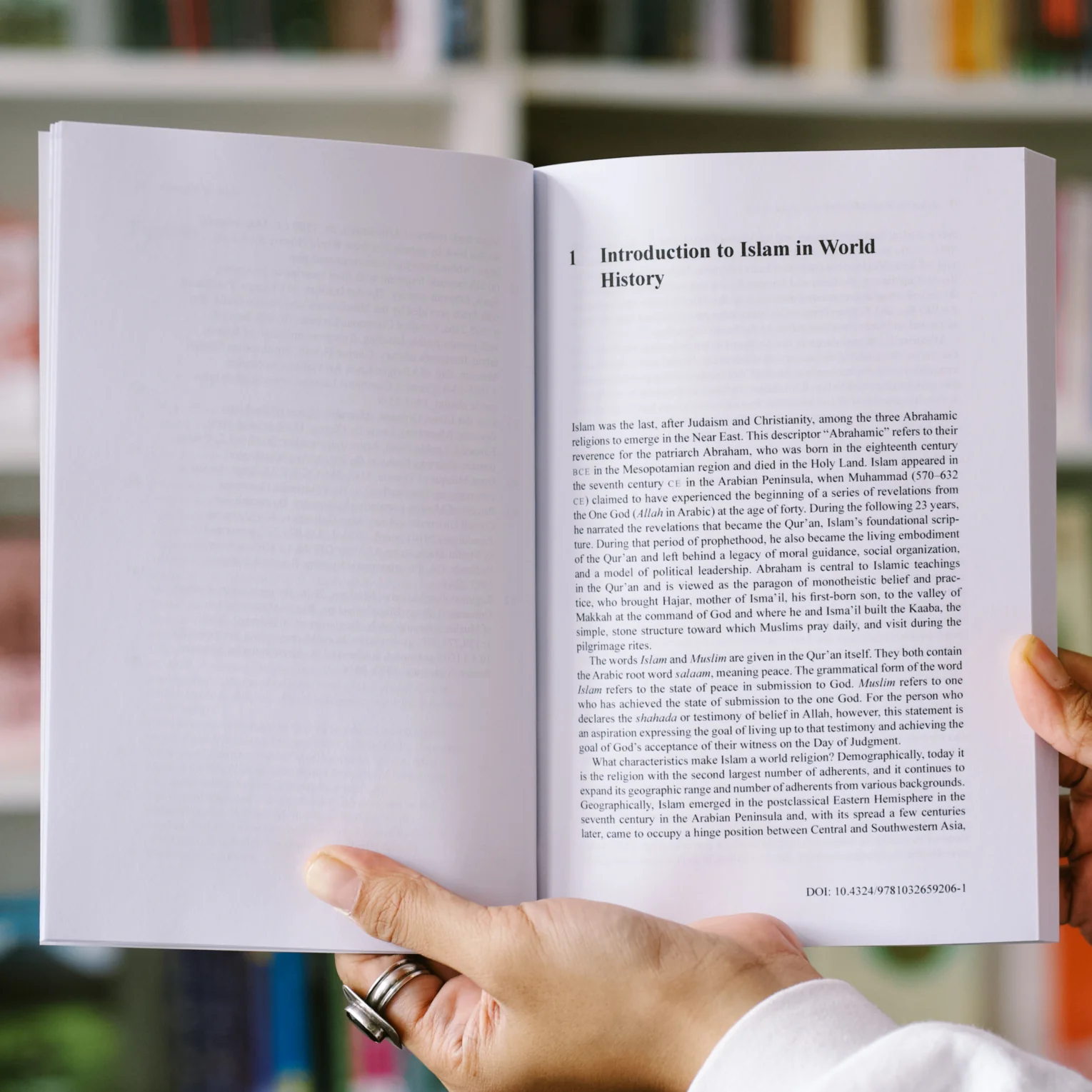
1. Introduction to Islam in World History
2. Beginnings
3. The Succession
4. Growth and Division
5. Islam in Afroeurasian Networks of Exchange
6. External and Internal Developments and Responses
7. Coalescing and Consolidation in the First Global Era, 1500–1800 CE
8. Modernization, Imperialism, and Nationalism, 1798–1945 CE
9. Muslim States and Communities, 1948–Present
Product Information
Product Information
Shipping & Returns
Shipping & Returns


Islam in World History
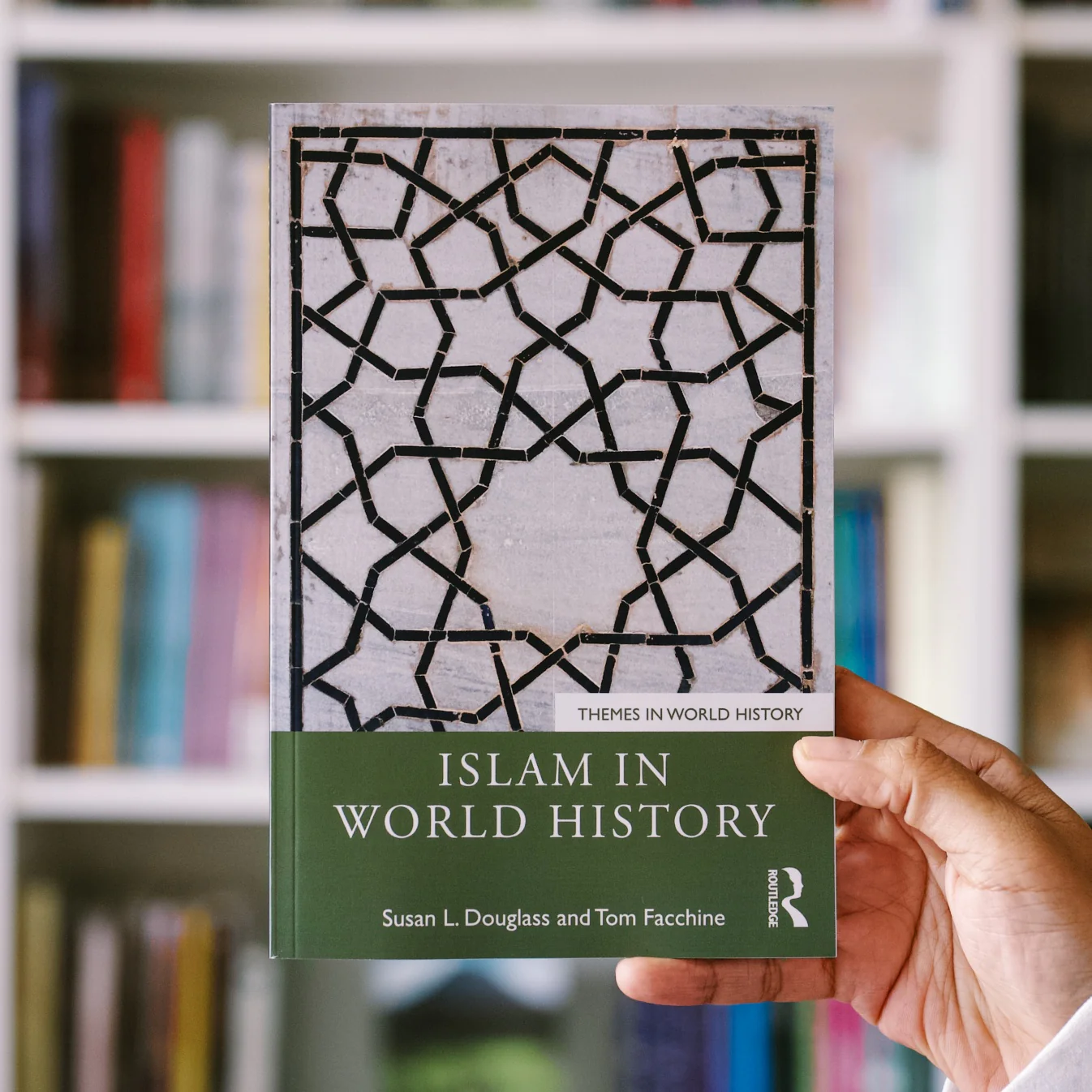
Islam in World History
Susan L. Douglass, Tom Facchine
Paperback, 214 pages
9781032648149
Islam in World History examines the emergence and development of Islam as a world religion in the Abrahamic tradition and the unfolding of Muslim society and civilization over fourteen centuries.
In contrast to the usual recital of the rise of Islam as a “new” religion, this book looks at the religious, geographic, and civilizational context in which Islam emerged and became a religiously, ethnically, and culturally diverse society deeply connected with hemispheric networks and exchanges in Afro Eurasia and ultimately a global religious community. The book addresses the development of institutions and social structures that came to characterize Muslim societies over the long term, with emphasis on their diverse expressions in various regions. The chronological approach, which analyzes the political history of Muslim society, allows for deeper understanding of how Islamicate civilization continued to develop and spread despite the fragmentation of the unitary state and its mixed record of adherence to Islamic ideals.
By addressing common questions and misperceptions over the long run of Islamic history to the present day, this book is the perfect resource for all students who study religion and the history of Islam across the world.
Contents
1. Introduction to Islam in World History
2. Beginnings
3. The Succession
4. Growth and Division
5. Islam in Afroeurasian Networks of Exchange
6. External and Internal Developments and Responses
7. Coalescing and Consolidation in the First Global Era, 1500–1800 CE
8. Modernization, Imperialism, and Nationalism, 1798–1945 CE
9. Muslim States and Communities, 1948–Present
Original: $71.81
-70%$71.81
$21.54Product Information
Product Information
Shipping & Returns
Shipping & Returns
Description
Susan L. Douglass, Tom Facchine
Paperback, 214 pages
9781032648149
Islam in World History examines the emergence and development of Islam as a world religion in the Abrahamic tradition and the unfolding of Muslim society and civilization over fourteen centuries.
In contrast to the usual recital of the rise of Islam as a “new” religion, this book looks at the religious, geographic, and civilizational context in which Islam emerged and became a religiously, ethnically, and culturally diverse society deeply connected with hemispheric networks and exchanges in Afro Eurasia and ultimately a global religious community. The book addresses the development of institutions and social structures that came to characterize Muslim societies over the long term, with emphasis on their diverse expressions in various regions. The chronological approach, which analyzes the political history of Muslim society, allows for deeper understanding of how Islamicate civilization continued to develop and spread despite the fragmentation of the unitary state and its mixed record of adherence to Islamic ideals.
By addressing common questions and misperceptions over the long run of Islamic history to the present day, this book is the perfect resource for all students who study religion and the history of Islam across the world.
Contents
1. Introduction to Islam in World History
2. Beginnings
3. The Succession
4. Growth and Division
5. Islam in Afroeurasian Networks of Exchange
6. External and Internal Developments and Responses
7. Coalescing and Consolidation in the First Global Era, 1500–1800 CE
8. Modernization, Imperialism, and Nationalism, 1798–1945 CE
9. Muslim States and Communities, 1948–Present