Little Drops: Cherished Children of Singapore’s Past
Theresa Devasahayam
Paperback, 288 pages
9789815127126
Little Drops: Cherished Children of Singapore’s Past is a compilation of biographies based on historical fact about the pain of separation and the lure of love, and how these themes constantly collide. These never-before-told stories chronicle how fourteen adoptees from the 1930s to the early 1970s in Singapore found a forever home when their own biological parents could not raise them. These stories recount the plight of families of that era; the strength of friendships and informal social networks; Singapore’s migrant heritage; how lives were thrown into turmoil during the Japanese Occupation; and the struggles individuals had borne during that period leading up to Singapore’s independence. Unfolding in these stories are the recurrent subthemes of poverty, superstition, how girl children were valued amongst the Chinese, how a family illness or death was culturally construed, and the magnanimous spirit of families taking in these abandoned children. What is most striking about many of these children is that they were sometimes not legally given away, seeming odd since children could be passed around so easily. And yet these children would almost always end up in safe, loving and caring homes of another culture. Grappling with who they are in terms of their ethnic identity is very much a common experience amongst all these adoptees. But rather than struggling between two cultural worlds, these adoptees almost always have a firm sense of longing and belonging to their families of adoption instead of their families of origin.
Product Information
Product Information
Shipping & Returns
Shipping & Returns
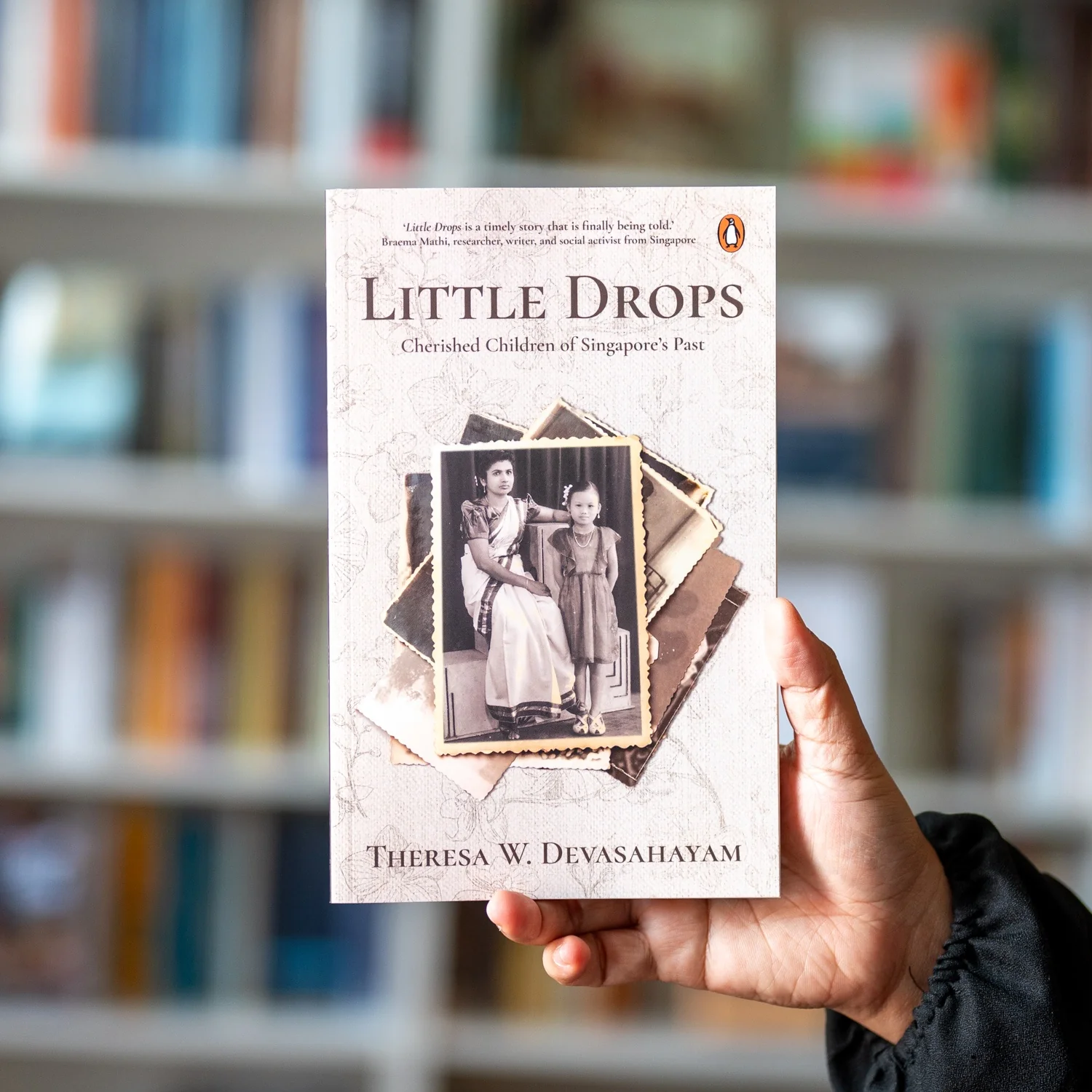


Little Drops: Cherished Children of Singapore’s Past
Little Drops: Cherished Children of Singapore’s Past
Theresa Devasahayam
Paperback, 288 pages
9789815127126
Little Drops: Cherished Children of Singapore’s Past is a compilation of biographies based on historical fact about the pain of separation and the lure of love, and how these themes constantly collide. These never-before-told stories chronicle how fourteen adoptees from the 1930s to the early 1970s in Singapore found a forever home when their own biological parents could not raise them. These stories recount the plight of families of that era; the strength of friendships and informal social networks; Singapore’s migrant heritage; how lives were thrown into turmoil during the Japanese Occupation; and the struggles individuals had borne during that period leading up to Singapore’s independence. Unfolding in these stories are the recurrent subthemes of poverty, superstition, how girl children were valued amongst the Chinese, how a family illness or death was culturally construed, and the magnanimous spirit of families taking in these abandoned children. What is most striking about many of these children is that they were sometimes not legally given away, seeming odd since children could be passed around so easily. And yet these children would almost always end up in safe, loving and caring homes of another culture. Grappling with who they are in terms of their ethnic identity is very much a common experience amongst all these adoptees. But rather than struggling between two cultural worlds, these adoptees almost always have a firm sense of longing and belonging to their families of adoption instead of their families of origin.
Original: $22.87
-70%$22.87
$6.86Product Information
Product Information
Shipping & Returns
Shipping & Returns
Description
Theresa Devasahayam
Paperback, 288 pages
9789815127126
Little Drops: Cherished Children of Singapore’s Past is a compilation of biographies based on historical fact about the pain of separation and the lure of love, and how these themes constantly collide. These never-before-told stories chronicle how fourteen adoptees from the 1930s to the early 1970s in Singapore found a forever home when their own biological parents could not raise them. These stories recount the plight of families of that era; the strength of friendships and informal social networks; Singapore’s migrant heritage; how lives were thrown into turmoil during the Japanese Occupation; and the struggles individuals had borne during that period leading up to Singapore’s independence. Unfolding in these stories are the recurrent subthemes of poverty, superstition, how girl children were valued amongst the Chinese, how a family illness or death was culturally construed, and the magnanimous spirit of families taking in these abandoned children. What is most striking about many of these children is that they were sometimes not legally given away, seeming odd since children could be passed around so easily. And yet these children would almost always end up in safe, loving and caring homes of another culture. Grappling with who they are in terms of their ethnic identity is very much a common experience amongst all these adoptees. But rather than struggling between two cultural worlds, these adoptees almost always have a firm sense of longing and belonging to their families of adoption instead of their families of origin.