Why We Are Restless
Benjamin Storey, Jenna Silber Storey
Paperback, 264 pages
9780691220116
On the Modern Quest for Contentment
A compelling exploration of how our pursuit of happiness makes us unhappy
“Today, so many of us are unable to sit still; obsessed with achievement, we are unable to think clearly about the purpose of our lives. The Storeys diagnose our ills as built into our implicit conception of happiness—we have sold ourselves short by aspiring to comfort and prosperity rather than to heroism or transcendent sources of wisdom or salvation. This challenging and provocative book provides us with substantial resources to look more closely at ourselves—all the while offering clarity, healing, and hope, wherever our reflections lead.”—Zena Hitz, author of Lost in Thought: The Hidden Pleasures of an Intellectual Life
We live in an age of unprecedented prosperity, yet everywhere we see signs that our pursuit of happiness has proven fruitless. Dissatisfied, we seek change for the sake of change—even if it means undermining the foundations of our common life. In Why We Are Restless, Benjamin and Jenna Storey offer a profound and beautiful reflection on the roots of this malaise and examine how we might begin to cure ourselves.
Drawing on the insights of Montaigne, Pascal, Rousseau, and Tocqueville, Why We Are Restless explores the modern vision of happiness that leads us on, and the disquiet that follows it like a lengthening shadow. In the sixteenth century, Montaigne articulated an original vision of human life that inspired people to see themselves as individuals dedicated to seeking contentment in the here and now, but Pascal argued that we cannot find happiness through pleasant self-seeking, only anguished God-seeking. Rousseau later tried and failed to rescue Montaigne’s worldliness from Pascal’s attack. Steeped in these debates, Tocqueville visited the United States in 1831 and, observing a people “restless in the midst of their well-being,” discovered what happens when an entire nation seeks worldly contentment—and finds mostly discontent.
Arguing that the philosophy we have inherited, despite pretending to let us live as we please, produces remarkably homogenous and unhappy lives, Why We Are Restless makes the case that finding true contentment requires rethinking our most basic assumptions about happiness.
Contents:
Prologue: We Restless Souls
Introduction: Four French Thinkers on the Modern Quest for Contentment
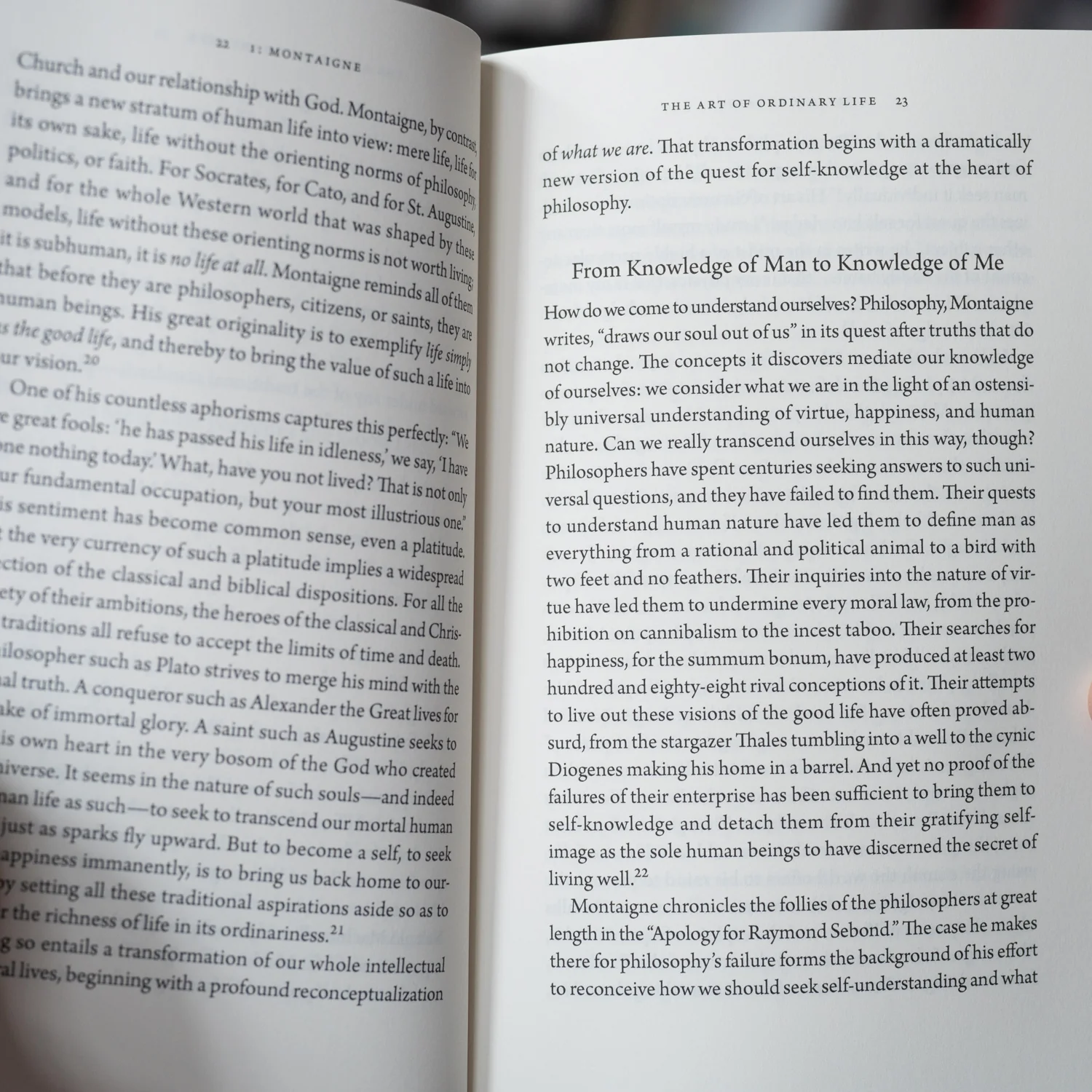
1. Montaigne: The Art of Ordinary Life
2. Pascal: The Inhumanity of Immanence
3. Rousseau: The Tragedy of Nature's Redeemer
4. Tocqueville: Democracy and the Naked Soul
Conclusion: Liberal Education and the Art of Choosing
Product Information
Product Information
Shipping & Returns
Shipping & Returns
Why We Are Restless
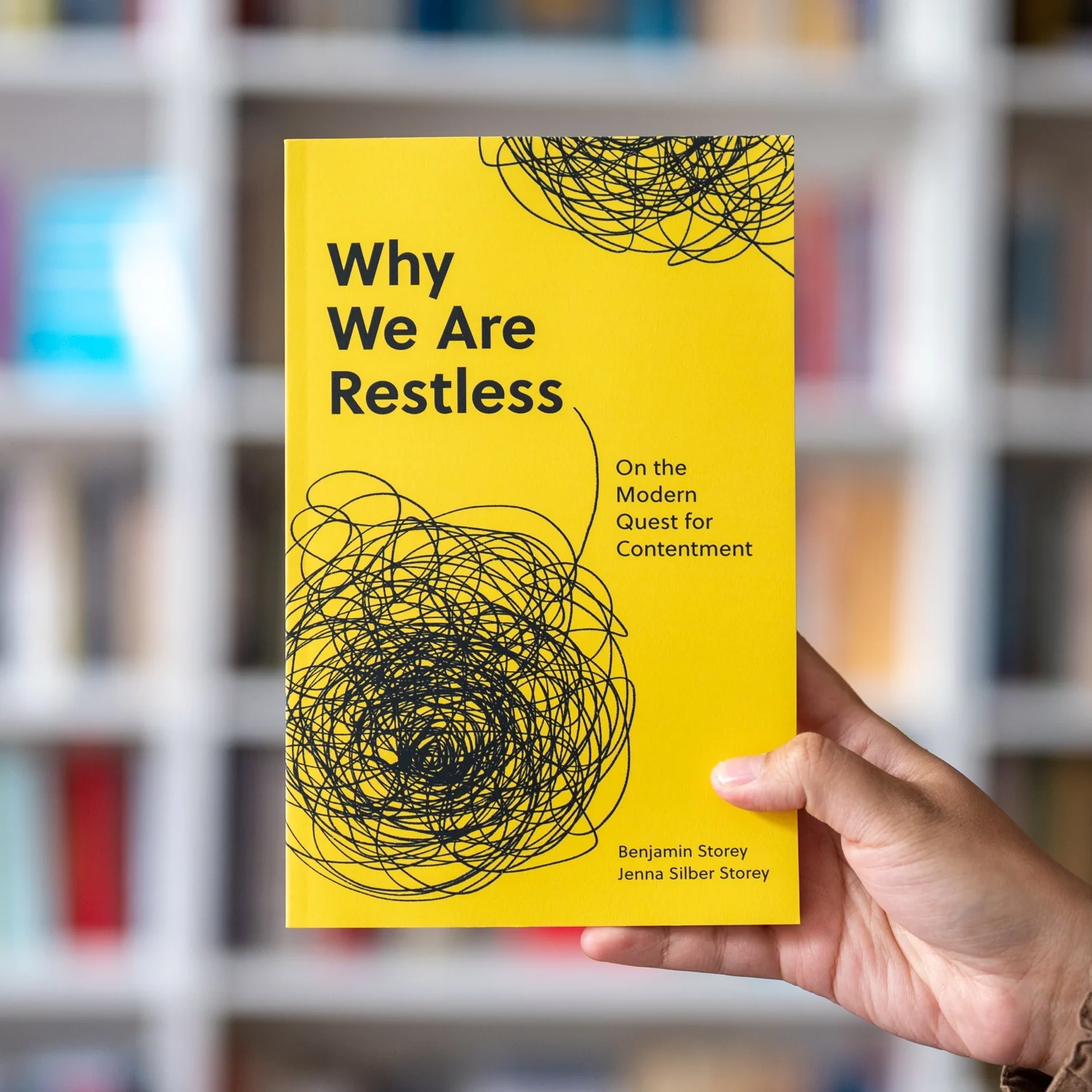
Why We Are Restless
Benjamin Storey, Jenna Silber Storey
Paperback, 264 pages
9780691220116
On the Modern Quest for Contentment
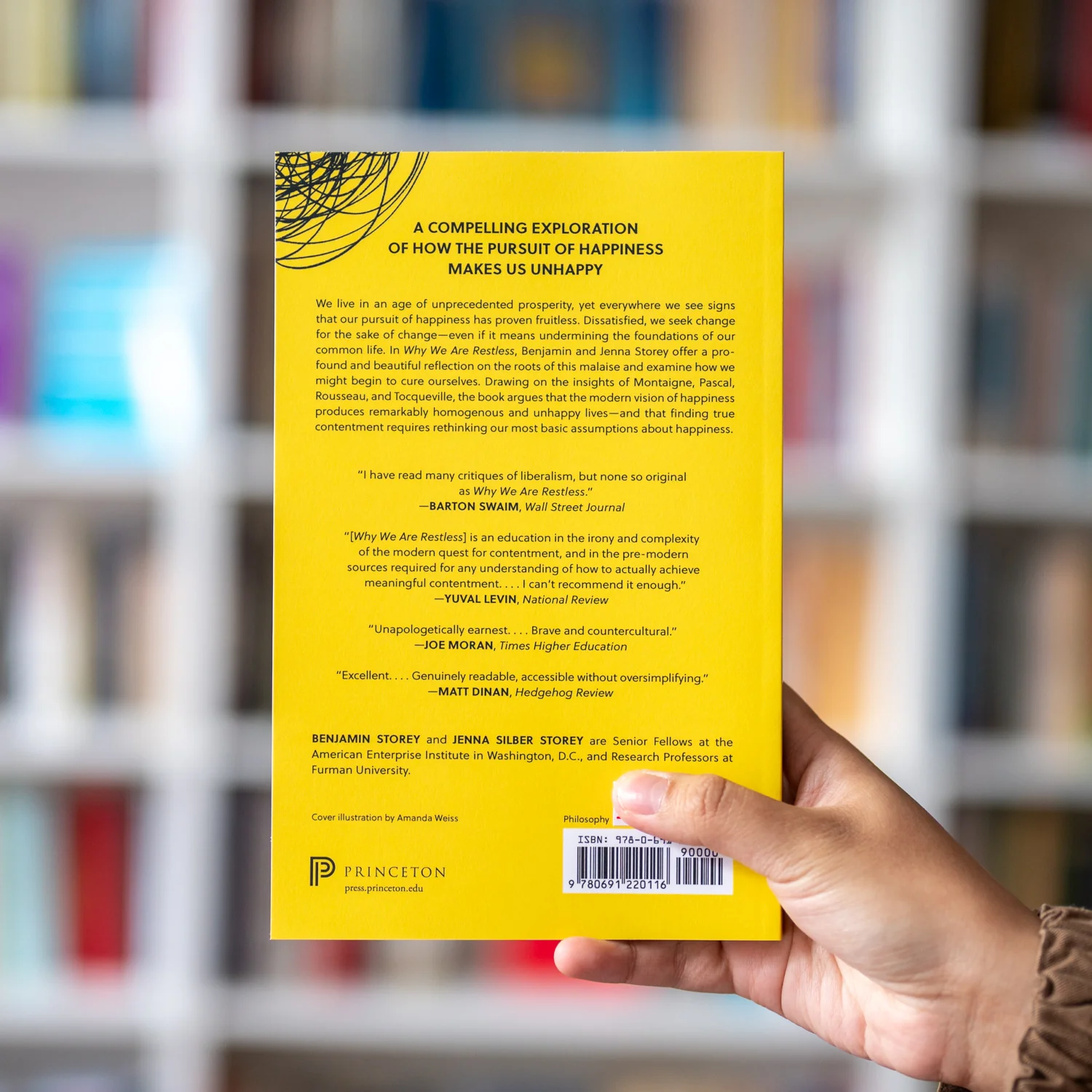
A compelling exploration of how our pursuit of happiness makes us unhappy
“Today, so many of us are unable to sit still; obsessed with achievement, we are unable to think clearly about the purpose of our lives. The Storeys diagnose our ills as built into our implicit conception of happiness—we have sold ourselves short by aspiring to comfort and prosperity rather than to heroism or transcendent sources of wisdom or salvation. This challenging and provocative book provides us with substantial resources to look more closely at ourselves—all the while offering clarity, healing, and hope, wherever our reflections lead.”—Zena Hitz, author of Lost in Thought: The Hidden Pleasures of an Intellectual Life
We live in an age of unprecedented prosperity, yet everywhere we see signs that our pursuit of happiness has proven fruitless. Dissatisfied, we seek change for the sake of change—even if it means undermining the foundations of our common life. In Why We Are Restless, Benjamin and Jenna Storey offer a profound and beautiful reflection on the roots of this malaise and examine how we might begin to cure ourselves.
Drawing on the insights of Montaigne, Pascal, Rousseau, and Tocqueville, Why We Are Restless explores the modern vision of happiness that leads us on, and the disquiet that follows it like a lengthening shadow. In the sixteenth century, Montaigne articulated an original vision of human life that inspired people to see themselves as individuals dedicated to seeking contentment in the here and now, but Pascal argued that we cannot find happiness through pleasant self-seeking, only anguished God-seeking. Rousseau later tried and failed to rescue Montaigne’s worldliness from Pascal’s attack. Steeped in these debates, Tocqueville visited the United States in 1831 and, observing a people “restless in the midst of their well-being,” discovered what happens when an entire nation seeks worldly contentment—and finds mostly discontent.
Arguing that the philosophy we have inherited, despite pretending to let us live as we please, produces remarkably homogenous and unhappy lives, Why We Are Restless makes the case that finding true contentment requires rethinking our most basic assumptions about happiness.
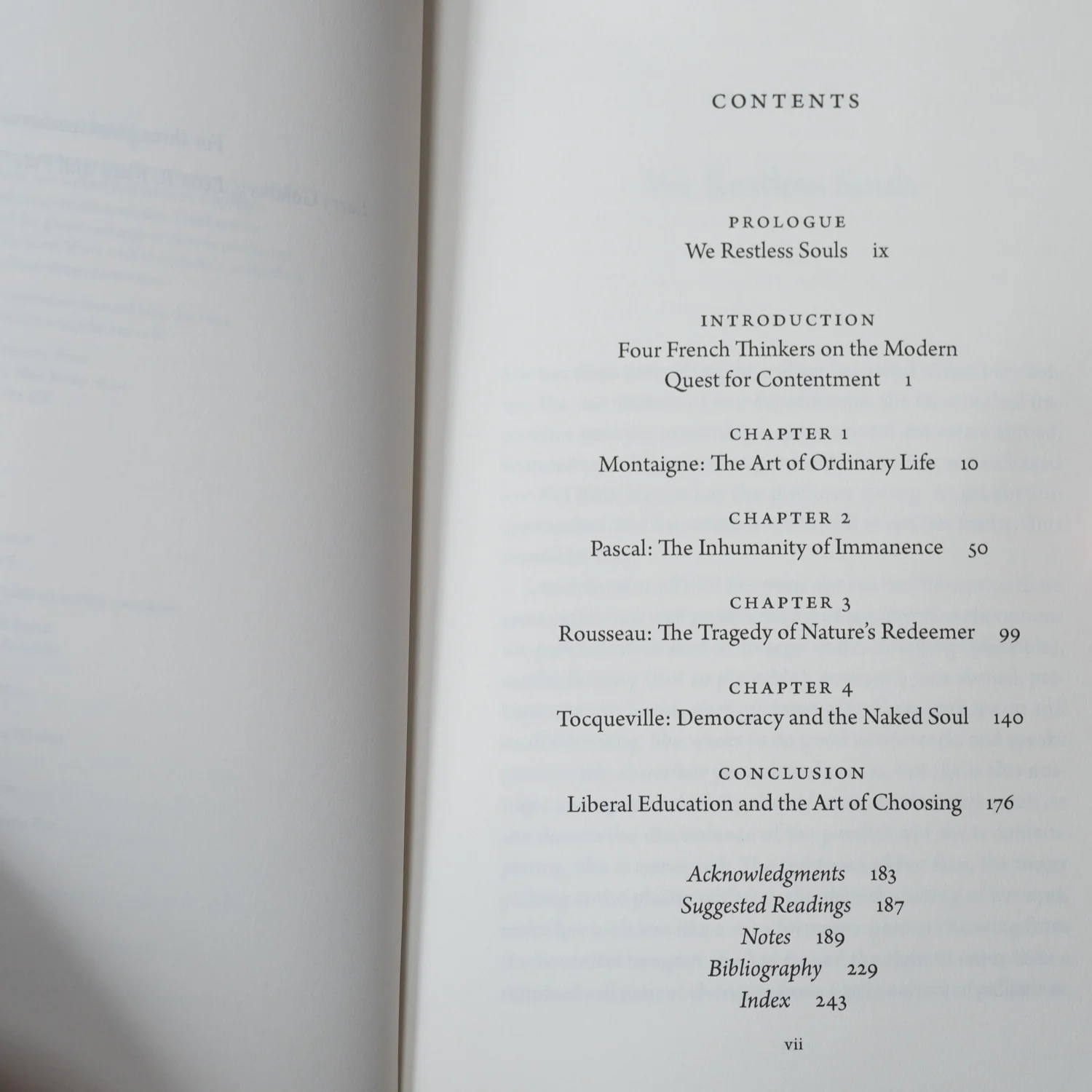
Contents:
Prologue: We Restless Souls
Introduction: Four French Thinkers on the Modern Quest for Contentment
1. Montaigne: The Art of Ordinary Life
2. Pascal: The Inhumanity of Immanence
3. Rousseau: The Tragedy of Nature's Redeemer
4. Tocqueville: Democracy and the Naked Soul
Conclusion: Liberal Education and the Art of Choosing
Product Information
Product Information
Shipping & Returns
Shipping & Returns
Description
Benjamin Storey, Jenna Silber Storey
Paperback, 264 pages
9780691220116
On the Modern Quest for Contentment
A compelling exploration of how our pursuit of happiness makes us unhappy
“Today, so many of us are unable to sit still; obsessed with achievement, we are unable to think clearly about the purpose of our lives. The Storeys diagnose our ills as built into our implicit conception of happiness—we have sold ourselves short by aspiring to comfort and prosperity rather than to heroism or transcendent sources of wisdom or salvation. This challenging and provocative book provides us with substantial resources to look more closely at ourselves—all the while offering clarity, healing, and hope, wherever our reflections lead.”—Zena Hitz, author of Lost in Thought: The Hidden Pleasures of an Intellectual Life
We live in an age of unprecedented prosperity, yet everywhere we see signs that our pursuit of happiness has proven fruitless. Dissatisfied, we seek change for the sake of change—even if it means undermining the foundations of our common life. In Why We Are Restless, Benjamin and Jenna Storey offer a profound and beautiful reflection on the roots of this malaise and examine how we might begin to cure ourselves.
Drawing on the insights of Montaigne, Pascal, Rousseau, and Tocqueville, Why We Are Restless explores the modern vision of happiness that leads us on, and the disquiet that follows it like a lengthening shadow. In the sixteenth century, Montaigne articulated an original vision of human life that inspired people to see themselves as individuals dedicated to seeking contentment in the here and now, but Pascal argued that we cannot find happiness through pleasant self-seeking, only anguished God-seeking. Rousseau later tried and failed to rescue Montaigne’s worldliness from Pascal’s attack. Steeped in these debates, Tocqueville visited the United States in 1831 and, observing a people “restless in the midst of their well-being,” discovered what happens when an entire nation seeks worldly contentment—and finds mostly discontent.
Arguing that the philosophy we have inherited, despite pretending to let us live as we please, produces remarkably homogenous and unhappy lives, Why We Are Restless makes the case that finding true contentment requires rethinking our most basic assumptions about happiness.
Contents:
Prologue: We Restless Souls
Introduction: Four French Thinkers on the Modern Quest for Contentment
1. Montaigne: The Art of Ordinary Life
2. Pascal: The Inhumanity of Immanence
3. Rousseau: The Tragedy of Nature's Redeemer
4. Tocqueville: Democracy and the Naked Soul
Conclusion: Liberal Education and the Art of Choosing